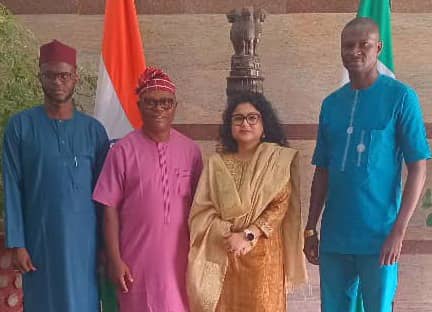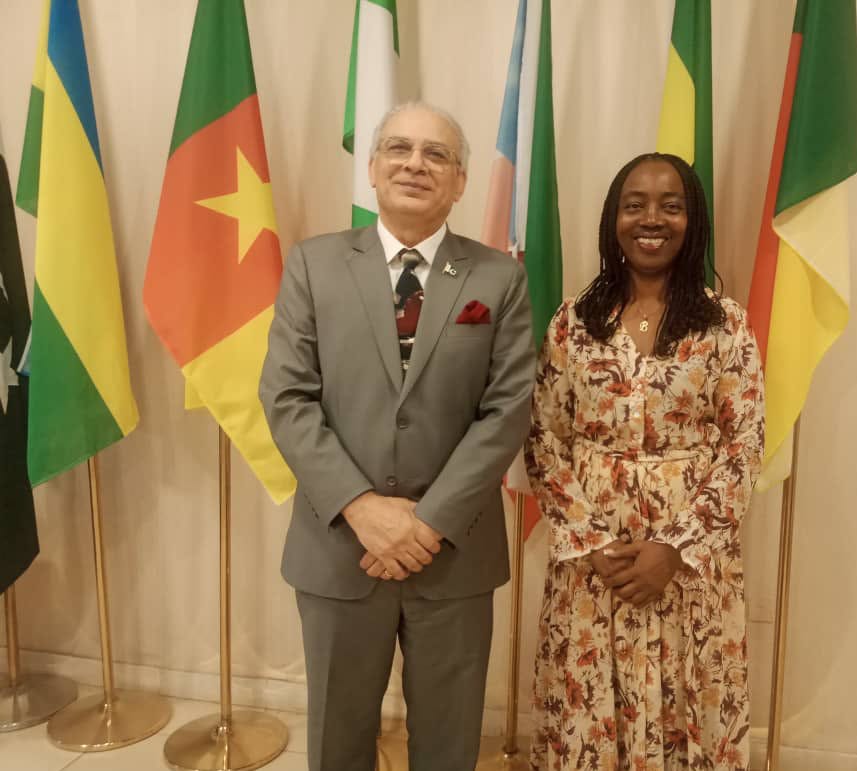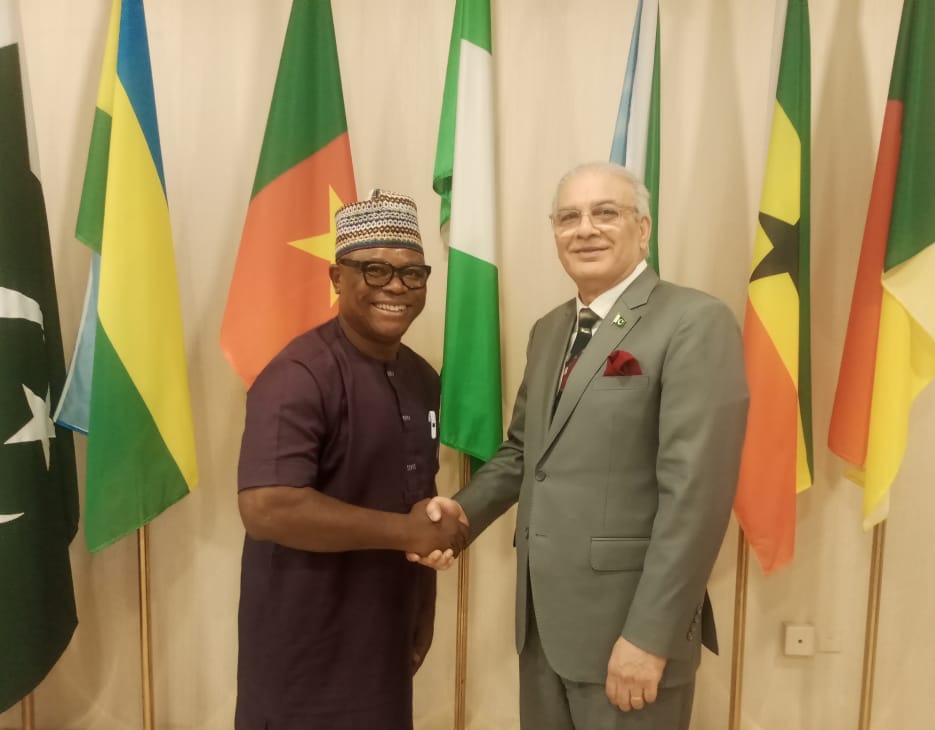

The High Commission of India in Nigeria, in partnership with Skipper Eye-Q Eye Hospital, officially hosted a free eye care camp for members of the Diplomatic Correspondents Association of Nigeria (DICAN).
The health initiative was organized in direct response to a request made by the Chairman of DICAN, Mr. Idehai Frederick, during a recent media reception at India House.
Speaking at the launch, the High Commissioner of India to Nigeria, Ambassador Abhishek Singh, emphasized the critical role of the press, describing the media as the “fourth wheel of democracy” alongside the executive, legislature, and judiciary.
”Regular interaction with the media is an important element of our diplomacy in Nigeria,” Ambassador Singh said, highlighting the unique connection between India as the world’s largest democracy and Nigeria as Africa’s largest democracy.
The medical camp provides journalists with comprehensive eye examinations and professional consultations. Reaffirming the commission’s commitment to supporting Nigerian media professionals, Ambassador Singh noted that maintaining healthy eyesight is essential for media personnel, whom he described as the “eyes and ears of our society.” He also projected increased bilateral engagement and media interactions in the coming months.
Reacting to the launch, DICAN Chairman Idehai Frederick expressed deep appreciation to the Indian High Commissioner and the management of Skipper Eye-Q Eye Hospital for organizing the medical camp.
Mr. Frederick stated that as Chairman, the health and overall well-being of DICAN members remain his topmost priority, noting that this initiative directly fulfills one of his core campaign promises.
He reaffirmed his commitment to the association, asserting that he will not relent in seeking strategic opportunities that benefit members and advance the association’s interests.
Furthermore, the DICAN Chairman commended both the embassy and the hospital for fostering a mutually beneficial relationship with the Nigerian media.
Also speaking at the event, the General Manager of Skipper Eye-Q Eye Hospital, Dr. Ajay Chaudhary, revealed that the hospital group operates seven branches across Nigeria, including facilities in Abuja (Asokoro and Gwarinpa) and four branches in Lagos (including Victoria Island).
According to Dr. Chaudhary, the hospital has significantly contributed to keeping medical expenditures within the local economy.
”Last year, we saved almost $100 million which was previously spent on eye care in different parts of the world,” Dr. Chaudhary stated.
He noted that the availability of state-of-the-art facilities has reversed outbound medical tourism to countries like India and Turkey, while simultaneously establishing Nigeria as a hub for medical tourism in West Africa, drawing patients from Ghana, Togo, Benin Republic, and Algeria.
Dr. Chaudhary added that the clinic is trusted by top Nigerian dignitaries, including former vice presidents, government officials, and corporate CEOs, demonstrating a growing trust in local institutional capacity.
Under the newly launched corporate policy, DICAN members can visit any Skipper Eye-Q branch, present their media identification cards, and receive a complete eye checkup entirely free of charge.
Additionally, due to the high screen time and reading demands of journalism, the hospital is providing free reading glasses to members who require them.
Dr. Chaudhary emphasized that this initiative has no expiration date and reflects a broader company policy to offer free screenings to professionals who drive societal impact, such as journalists, healthcare workers, and NGO members.
”Our main motto is to eradicate blindness from society, irrespective of religion, gender, or nationality,” he said.
Assessing Nigeria’s healthcare landscape after six years of operating in the country, Dr. Chaudhary pointed out that 50% of Nigeria’s population is currently under the age of 22.
He warned that within the next decade, the country faces a looming burden of preventable eye conditions, such as glaucoma and diabetic retinopathy.
However, he expressed optimism about the country’s proactive infrastructure development, driven by foreign direct investment (FDI) and new specialized hospitals.
”Nigeria is working on it, and infrastructure is getting developed. They are investing in healthcare which they will need in the next 10 years,” Dr. Chaudhary said, adding that these advancements, alongside training local professionals, will help improve the country’s average life expectancy, strengthen the economy, and raise the national happiness index.