
The appointment of Professor Hakeem Fawehinmi as the substantive Vice Chancellor of the University of Abuja has been plunged into controversy following allegations that the selection process breached the university’s own eligibility criteria regarding academic qualifications.
At the heart of the dispute is whether Professor Fawehinmi meets the mandatory requirement of possessing a Doctor of Philosophy (PhD) degree, as specified in the 2025 advertisement for the position.
The Selection Process
The vacancy, advertised last year, explicitly required candidates to hold a PhD and possess at least 10 years of experience as a professor. Out of over 50 applicants, 10 were shortlisted following security screening by the Department of State Services (DSS).
A Joint Council/Senate Selection Board subsequently conducted a two-day interview process. Based on a merit-based scoring system, the Governing Council selected Fawehinmi, who emerged as the top candidate among the final three.
The Legal and Academic Row
The appointment is now facing formal challenges through petitions submitted to the Federal Ministry of Education and the University Governing Council. Petitioners argue that Fawehinmi’s medical fellowship—a professional qualification—was erroneously treated as an equivalent to an academic PhD.
The controversy is bolstered by two recent regulatory and legal milestones:
National Industrial Court Ruling: A May 8, 2025, judgment (Suit No. NICN/ABJ/421/2024) reportedly ruled that medical fellowships are professional postgraduate diplomas and do not equate to an academic doctorate (PhD).
Ministry of Education Clarification: On March 5, 2026, the Federal Ministry of Education clarified that while medical colleges may be accredited to award PhDs, a fellowship certification remains a professional distinction, not an academic degree.
Implications for University Autonomy
Critics argue that the appointment undermines the University Miscellaneous Provision Act of 1993 (University Autonomy Act). While the Act grants Governing Councils the power to manage appointments to shield institutions from political interference, observers note a “disturbing pattern” of councils bypassing statutory requirements to favor specific candidates.
The Federal Government has maintained that while fellowships are essential for clinical practice, the PhD remains the global benchmark for academic leadership in the university system.
Questions for the Governing Council
The situation has raised urgent questions regarding the oversight of the selection process. Stakeholders are now calling on the Governing Council and the Ministry of Education to address whether the advertised criteria were intentionally ignored and whose interests were served by the alleged bypass of the PhD requirement.
As of press time, the University Governing Council has not issued a formal rebuttal to the petitions, leaving the legitimacy of the institution’s new leadership under significant public and legal scrutiny.
The Minister of State for Foreign Affairs, Ambassador Bianca Odumegwu-Ojukwu, has issued a stern directive to newly appointed Ambassadors and High Commissioners, warning that the “sacred duty” of representing Nigeria abroad leaves no room for failure, administrative indiscipline, or the mishandling of the nation’s image.
Speaking at an induction ceremony at the Ministry’s Rotunda Hall, the Minister delivered a sobering assessment of the challenges ahead, making it clear that the Federal Government expects total adherence to established protocols and maximum results despite fiscal constraints.
A Warning on Communication and Protocol
In a move to curb administrative drift, the Minister delivered a sharp reminder regarding the chain of command. She warned the designates that the Ministry of Foreign Affairs remains the sole central coordinating body and the only official channel between their missions and the Nigerian government.
”Adherence to these established channels is not merely procedural,” the Minister cautioned. “It is fundamental to effective diplomacy. You are required to maintain close and consistent engagement with the Ministry on all official matters.”
She further warned the envoys to respect the sovereignty of their host countries by engaging strictly through their host ministries of foreign affairs, noting that bypassing these channels would damage their “credibility and access.”
No “License for Failure” Due to Scarcity
Addressing the inevitable challenge of limited resources, Ambassador Odumegwu-Ojukwu was blunt: a lack of funds will not be accepted as an excuse for poor performance.
”You will find that whereas your task is vast, the resources placed at your disposal are scarce,” she admitted. “However, a lean budget is not a license for failure. It is a call for prudency and ingenuity.” She warned that the sovereignty entrusted to them must be managed with “honor, dignity, and excellence,” regardless of financial hurdles.
Mandate on Diaspora Protection
The Minister issued a firm charge regarding the treatment of Nigerians abroad, signaling that the era of unresponsive missions must end. She warned that the safety and prosperity of the diaspora must be a “top priority at all times.”
Envoys were told they would be held accountable for:
The responsiveness of their consular services.
The effectiveness of their crisis response.
The quality of their engagement with Nigerian communities.
Navigating a “Stormy” Global Landscape
The Minister warned the diplomats that they are entering their posts at a time of “profound international fluidity,” describing the current geopolitical climate as a “stormy sea.” With old alliances cracking and new blocs forming, she warned that some situations would “test their resolve” while others might “exploit their challenges.”
She concluded by reminding the appointees that they are “strategic agents” carrying the weight of 230 million people. Any action that diminishes Nigeria’s image or fails to align with the “Four Ds” policy thrust—Democracy, Development, Demography, and Diaspora—would be viewed as a failure of their primary mandate.
President Bola Ahmed Tinubu has announced a strategic reordering of Nigeria’s foreign policy framework, placing the nation’s demographic strength at the forefront of its international engagements.
The President’s directive was delivered by the Secretary to the Government of the Federation (SGF), Senator George Akume, during the opening of an induction course for newly appointed Ambassadors and High Commissioners-designate at the Rotunda Hall of the Ministry of Foreign Affairs in Abuja.
From Democracy to Demography
In a significant shift in diplomatic strategy, the President revealed a restructuring of the “4D” foreign policy—Democracy, Development, Demography, and Diaspora. The new order prioritizes Demography, followed by Development, Diaspora, and Democracy.
Explaining the rationale, the President noted that while Nigeria has remained a stable democracy since 1999, the new hierarchy places the Nigerian people at the center of the nation’s global agenda. The move is intended to leverage Nigeria’s status as the continent’s most populous nation to drive economic power and ensure that foreign policy outcomes yield maximum benefits for its citizens.
The Mandate for Modern Diplomacy
Addressing the envoys, President Tinubu charged them to embody the qualities of “21st-century ambassadors,” urging them to combine the analytical skills of a diplomat with the efficiency of a “chill executive” focused on national profitability.
”Your voyage into diplomatic service comes at a time when diplomacy demands agility, innovation, and strategic thinking,” the President stated. “Traditional diplomacy must now be complemented by digital engagement, public diplomacy, and strategic communication.”
The President emphasized that the envoys must be proactive in:
Economic Diplomacy: Fostering strategic partnerships to attract modern technology and Foreign Direct Investment (FDI).
Citizen Welfare: Prioritizing the protection and support of Nigerians living abroad.
National Narrative: Communicating the achievements of the administration’s “Renewed Hope” agenda accurately and confidently on the global stage.
Navigating Global Shifts
The President acknowledged that the international system is being rapidly reshaped by geopolitical dynamics, economic shocks, and technological disruptions. He urged the diplomats to navigate these “fluid” realities with “clear-sightedness and fertile determination” to ensure Nigeria is not merely reacting to global changes but actively shaping them.
The induction serves as a final preparation for the principal representatives before they depart to their respective posts, where they will serve as the primary voices of the Federal Republic of Nigeria.
By High Commissioner on IAFS IV
As the sun rises over New Delhi on May 31, the air will carry more than just the heat of summer; it will carry the weight of history and the electricity of a shared future. The 4th India-Africa Forum Summit (IAFS-IV) isn’t just another entry in a diplomatic logbook. It is a watershed moment—a gathering of two giants determined to rewrite the global narrative of growth and mutual respect.
For those of us representing India on the African continent, particularly in the vibrant powerhouse of Nigeria, the momentum is palpable. We aren’t just talking about trade deals; we are talking about a “re-imagining” of a relationship that spans centuries but is now finding its 21st-century voice.
A Partnership Built on ‘Ubuntu’
At the heart of this summit lies a beautiful cultural bridge. Africa gives us Ubuntu—the philosophy that “I am because we are.” India offers Vasudhaiva Kutumbakam—the belief that “The world is one family.” These aren’t just poetic slogans; they are the bedrock of the 10 core principles for engagement outlined by Prime Minister Narendra Modi. From making Africa a top diplomatic priority to tackling the shared shadows of climate change and terrorism, the strategy is clear: India’s rise is incomplete without Africa’s progress.
By the Numbers: Development Done Right
The transformation over the last 15 years is staggering. India’s model of “South-South cooperation” isn’t about imposing a vision; it’s about listening to partners. The results of this “quiet revolution” in development speak through the infrastructure:
These aren’t just statistics; they are the stories of villages finally connected to the grid and communities gaining access to clean water for the first time.
The Nigeria Connection: The Heart of the Matter
Nigeria holds a special seat at this table. As Africa’s largest economy, it embodies the very dynamism the Summit seeks to harness. The “entrepreneurial spirit” found in the streets of Lagos or Abuja mirrors the “startup culture” of Bengaluru.
IAFS-IV serves as a massive laboratory for these two nations to experiment. We are looking at a future where:
Tech Startups collaborate on fintech solutions for the unbanked.
Energy Solutions transition both regions toward a greener future.
Manufacturing Hubs create jobs for the world’s youngest populations.
Beyond Diplomacy: A Call to Action
Since the last summit in 2015, the world has shifted. India’s economy has reached new heights, and Africa’s economic prowess has matured. This is no longer the era of incremental steps; it is the era of transformation.
The 4th India-Africa Forum Summit is an open invitation. It’s for the entrepreneurs, the civil society leaders, and the youth who will inherit this partnership. As we meet in New Delhi, we aren’t just signing papers—we are charting a path for inclusive growth that ensures that when India and Africa thrive, humanity thrives.
Nigeria has issued a forceful call for the immediate reform of the global multilateral system, demanding a permanent seat on the United Nations Security Council to address the long-standing exclusion of Africa from top-tier international decision-making.
Speaking on Friday at the 18th BRICS Foreign Ministers’ Meeting (FMM) in New Delhi, Amb. Dunoma Umar Ahmed, Permanent Secretary of Nigeria’s Ministry of Foreign Affairs, declared that the current international order is no longer sustainable. Representing Nigeria as a BRICS Partner Country, Ahmed emphasized that the world is at a “turning point” where geopolitical rivalries and economic fragmentation are eroding trust in global institutions.
Ending Africa’s Exclusion
The centerpiece of Nigeria’s statement was a direct challenge to the structure of the UN Security Council. Ahmed argued that a continent of 1.4 billion people cannot remain excluded from permanent representation.
”Such exclusion is neither justifiable nor sustainable,” Ahmed stated. “Nigeria stands prepared to assume this responsibility. We are ready to represent Africa’s voice with integrity, balance, and strength.”
Alignment with BRICS Vision
Nigeria’s participation underscores its deepening ties with the BRICS bloc (Brazil, Russia, India, China, and South Africa). Ahmed praised the platform as a “constructive force” for the Global South, noting that Nigeria’s vision for a multipolar world aligns with the BRICS commitment to:
- Financial Reform: Restructuring international financial institutions to provide emerging economies with a more credible voice and fairer access to development financing.
- Trade Equity: Resisting protectionism and advancing regional integration, highlighted by Nigeria’s leadership in the African Continental Free Trade Area (AfCFTA).
- Sovereign Equality: Promoting an international order founded on mutual respect rather than the interests of a “privileged few.”
Domestic Reforms as a Global Model
Ambassador Ahmed linked Nigeria’s international demands to the domestic agenda of President Bola Ahmed Tinubu. He noted that Nigeria’s “bold and transformative” internal reforms in economic diversification, security, and climate action serve as a template for the kind of leadership the country intends to bring to the global stage.
”Our actions at home… are aligned with the broader call for reform in international governance,” Ahmed said. “Nigeria is prepared to lead by example.”
A Call for Unity
The statement concluded with a plea for “unity of purpose” among BRICS members and other international bodies like the African Union and ECOWAS. Ahmed stressed that the choices made today by global leaders will determine whether governance becomes a true instrument of peace or remains a source of disparity.
The meeting in New Delhi marks a significant milestone in Nigeria’s foreign policy trajectory as it seeks to solidify its status as the leading diplomatic and economic voice for Africa within the evolving BRICS+ framework.
Former Nigerian President Dr. Goodluck Ebele Jonathan has confirmed his participation in the upcoming Diplomatic, Security, Trade, and Investment International Conference, where he will be honoured with the prestigious DICAN International Award for Statesmanship and Global Peace.
The conference, themed “Information Warfare (FIMI): Strengthening Global Security, Trade, and Investment Through Collaborative Truth: Role of Diplomacy, Intelligence, and Media,” is scheduled for May 20, 2026, at the Rotunda Hall of Ministry of Foreign Affairs, Abuja.
Dr. Jonathan accepted the honour from the Diplomatic CorrespondentsAssociationofNigeria (DICAN) based on the credibility of the platform.
The award recognizes his selfless service, dedication, and historic commitment to democracy across Africa.
The elder statesman will address the assembly on global peace and security in the face of challenges posed by Foreign Information Manipulation and Interference (FIMI) and disinformation.
Highlighting the significance of the former president’s attendance, DICAN Chairman Idehai Frederick emphasized the weight Dr. Jonathan brings to the global conversation.
”President Goodluck Jonathan’s acceptance of this award and his decision to address the assembly underscores the immense credibility of this platform.”
“His enduring legacy as a champion of Nigeria, African and global democracy makes him the definitive voice to speak on safeguarding global peace against the tide of disinformation,” Frederick said.
The high-level summit is organized in partnership with the Centre for Communications, Development, and Diplomacy in Africa.
The event will draw over 100 diplomatic missions, including Nigeria’s Minister of Foreign Affairs; Permanent Secretary, Ambassador Dunoma Ahmed; and the Ambassadors of the United States, China, Spain, and the European Union as well as security and intelligence agencies, corporate leaders, UN bodies, and civil society organizations.
Chairman Idehai urged the international assembly to treat the summit’s as a critical global priority.
”Information warfare is a direct threat to global stability, trade, and democratic institutions.”
“We urge all stakeholders to do absolute justice to this the theme. We must emerge from the conference with a unified, collaborative strategy for the ultimate good of the world,” he concluded.
The conference will also serve as the launchpad for a global campaign against FIMI, fake news and disinformation.
Key institutional messages will be delivered by prominent figures, including Rt. Hon. Ndudi Elumelu; Henry Ifeanyi Mbadiwe, Registrar General of the Chartered Institute of Project Managers of Nigeria (CIPMN); and Nonye Ayeni, Executive Director of the Nigerian Export Promotion Council (NEPC).
The event will conclude with an awards ceremony recognizing outstanding institutions and individuals, including domestic airline Air Peace, for their exceptional service and contributions to national development.
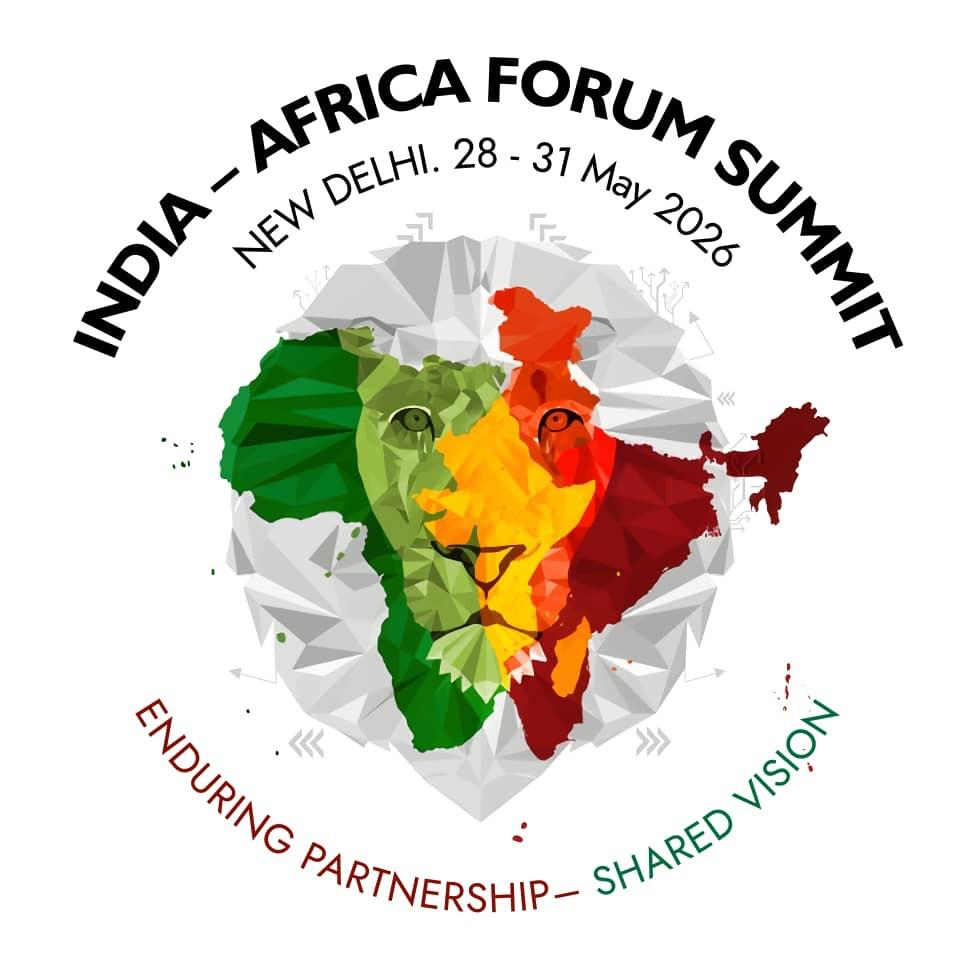
A major upcoming summit between India and African nations, originally set to kick off in New Delhi next week, has been put on hold so leaders can focus on an evolving public health situation in parts of Africa.
The Fourth India-Africa Forum Summit (IAFS IV) was scheduled to run from May 28–31, 2026. However, following discussions between the Indian government, the African Union Commission, and the AU Chairperson, both sides decided it was best to push the meeting to a later date.
The main goal behind the delay is ensuring that African leaders and stakeholders can fully participate without the distraction or risk of an ongoing health crisis back home. Officials confirmed that new dates for the summit will be worked out together and announced down the road.
Before making the call to postpone, representatives from both sides talked through the current health challenges facing the continent. Indian officials expressed strong solidarity with African governments and pledged to back the Africa CDC’s efforts, emphasizing that the response should be driven by Africa itself.
Even with the schedule change, both sides made it clear that the partnership between India and Africa remains rock solid, built on a long history of mutual respect, cooperation, and a shared focus on the well-being of their people.
The Chairman, Diplomatic Correspondents Association of Nigeria (DICAN) Comrade, IDEHAI Frederick, his Exco and members of the association conferred on the Minister of Foreign Affairs, Ambassador Yusuf Maitama Tuggar DICAN’s Grand Patron in an elaborate occasion at the minister’s conference hall in MFA, Abuja.
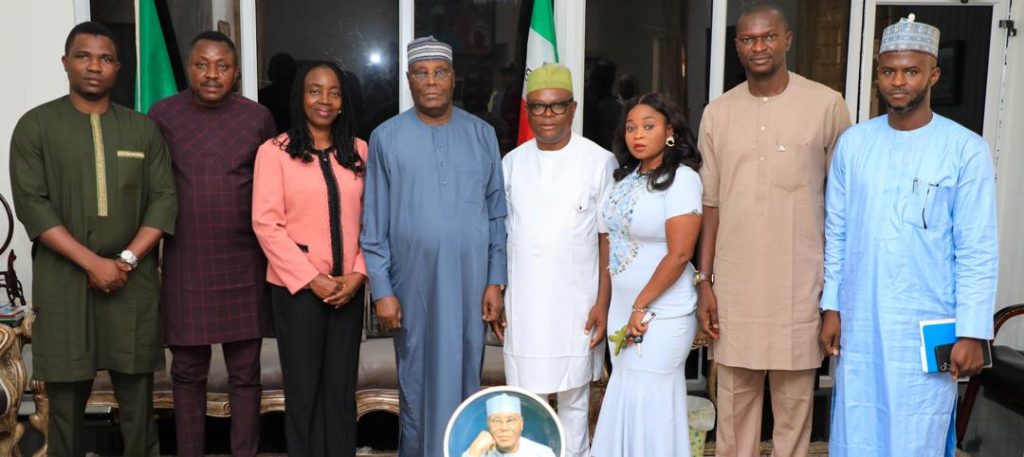
DICAN’s courtesy visit to former Vice President of the Federal Republic of Nigeria, His Excellency, Alhaji Atiku Abubakar in Abuja
Courtesy visit by the Executive Council of Diplomatic Correspondents Association of Nigeria (DICAN) to the Director General, Institute for Peace and Conflicts Resolution, in Abuja.